
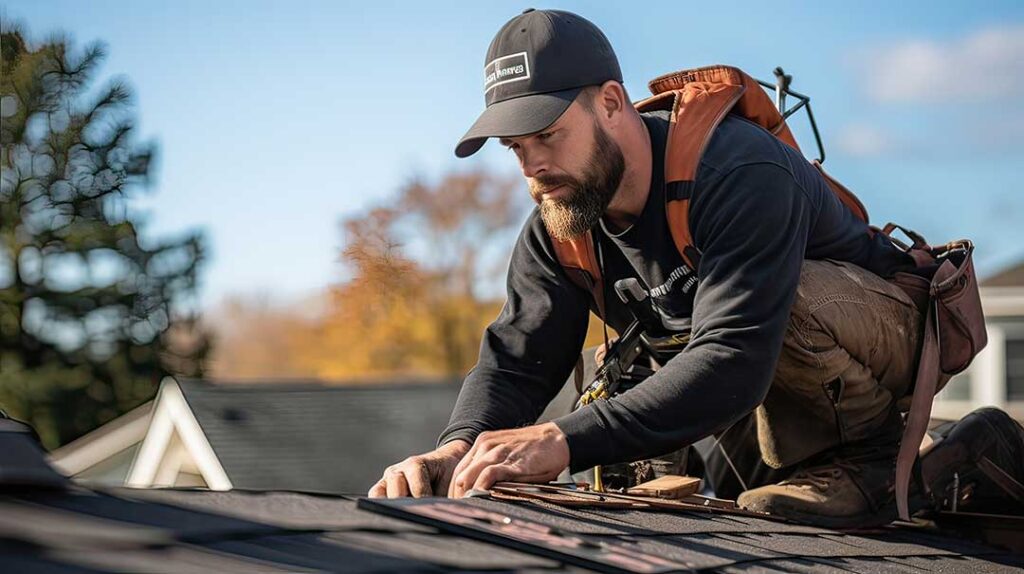
Roof decking is the structural surface installed over a home’s rafters or trusses and beneath the roofing materials. It creates the base for underlayment and shingles or other roof coverings, while also helping transfer roof loads into the framing system.
For homeowners in Batavia, NY, understanding this hidden part of the roof can make it easier to recognize warning signs, understand inspection reports, and distinguish a surface repair from a more involved structural concern.
What is roof decking?
Roof decking, also called roof sheathing, is the layer of panels attached to the roof frame. Modern homes commonly use wood structural panels, such as plywood or oriented strand board. Older homes may contain solid wood boards installed across the rafters.
The decking performs several jobs:
- Supports underlayment and the outer roof covering
- Helps distribute the weight of snow, ice, and roofing materials
- Connects the roof surface to the rafters or trusses
- Provides a relatively continuous surface for installation
- Contributes to the roof’s resistance to wind movement
Decking is not the same as shingles, underlayment, flashing, or insulation. It is the structural layer between the roof framing and the weatherproofing materials above it.
How does roof decking fit into the roof system?
A typical sloped roof contains several layers, each with a separate function. Starting inside the attic and moving outward, the assembly may include ceiling finishes, insulation, roof framing, decking, underlayment, flashing, and the final roof covering.
The decking is especially significant because problems above it can eventually affect it. A small leak around a penetration, for example, may allow water to reach the decking. If the leak continues, the panel can lose strength even when the shingles still appear acceptable from the ground.
Roofing materials also depend on properly supported decking. Fasteners need sound material to hold them securely. If the wood has deteriorated, nails or other fasteners may loosen, allowing the roof covering to shift or become vulnerable to wind.
What types of roof decking are common?
The type of decking depends partly on the age and construction of the home.
Plywood is made from thin wood veneers bonded in layers. It is generally stable and strong when properly installed and kept dry.
Oriented strand board, or OSB, is made from compressed wood strands. It is widely used in residential construction and can perform well when protected from prolonged moisture exposure.
Plank decking consists of individual boards installed across the roof framing. This was common in older construction. Some plank roofs remain serviceable for decades, but gaps, splitting, movement, and uneven surfaces may affect later roofing work.
Tongue-and-groove panels have interlocking edges that help limit movement between adjacent sheets. They may be found in certain roof designs and older or custom-built homes.
The material alone does not determine the condition of the roof. Thickness, span, fastening, ventilation, moisture history, and the condition of the supporting framing all matter.
How can a homeowner tell if decking is damaged?
Roof decking is often hidden, so visible symptoms may appear elsewhere first. Possible indicators include:
- Soft or sagging areas on the roof plane
- A dip between rafters or trusses
- Ceiling stains or damp attic insulation
- Daylight visible through roof boards or panels
- Musty odors in the attic
- Rusted or corroded fasteners
- Wood that feels soft, crumbly, swollen, or discolored
- Shingles that appear uneven because the surface beneath them has shifted
A roof can have damaged decking without showing obvious interior stains. Water may evaporate, follow framing, or remain localized near an eave, valley, chimney, vent, or other penetration.
Walking on a questionable roof is not a safe way to test it. A weak panel can break unexpectedly, and slippery conditions are especially common during wet, icy, or cold weather.
Why does moisture cause so much damage?
Wood decking can tolerate normal changes in humidity, but repeated wetting and drying can lead to deterioration. Persistent moisture may cause panels to swell, delaminate, soften, or support fungal decay.
In this region, roof assemblies are exposed to changing weather throughout the year. Snow accumulation, freeze-thaw cycles, wind-driven rain, spring moisture, and ice buildup near roof edges can all increase the chance that water will reach vulnerable areas.
Poor attic ventilation can also contribute indirectly. Warm, moist air escaping into a cold attic may condense on roof components, particularly during winter. This is different from an exterior roof leak, although both conditions can damage decking and insulation.
The source of moisture needs to be identified before damaged material is replaced. Otherwise, new decking may be exposed to the same problem.
Does every roof replacement require new decking?
No. Roof decking does not automatically need replacement simply because the outer roofing material is being replaced.
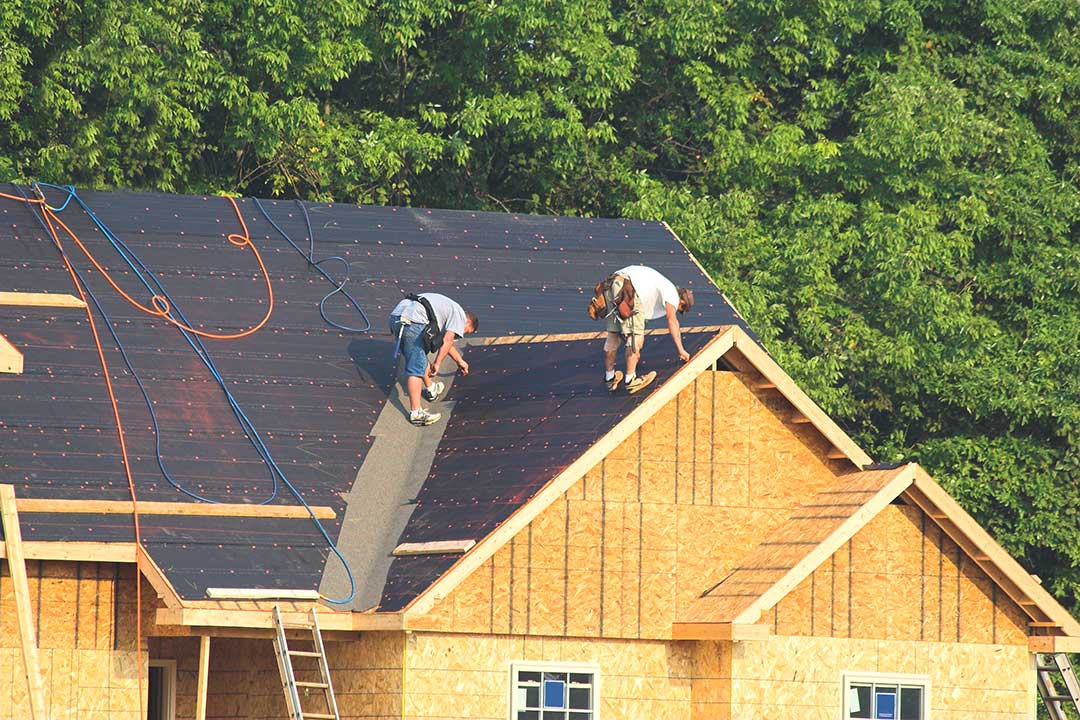
During a reroofing project, sections of decking may be exposed and evaluated. Sound panels or boards can often remain in place if they are adequately supported, properly fastened, and free of significant damage. Replacement becomes more likely when the decking is structurally weak, badly deteriorated, severely warped, or unable to hold fasteners.
Some conditions are not visible until the old roofing material has been removed. That is why the final amount of decking work can differ from an initial visual expectation.
A layer of new material installed over deteriorated decking does not correct the underlying structural problem. Covering damaged wood may hide warning signs while leaving the roof vulnerable.
Is soft decking the same as a roof leak?
Not necessarily. Soft decking often indicates moisture damage, but the moisture may come from several sources. Possible causes include:
- A failed flashing detail
- Damaged or missing roof covering
- Water entering around a vent or chimney
- Ice-related water backup near the roof edge
- Condensation from attic air leakage
- Plumbing or mechanical equipment above the ceiling
- Long-term exposure caused by an old, unresolved leak
The location of an interior stain does not always match the location where water entered. Water can travel along the underside of decking, rafters, insulation, or other building materials before becoming visible.
What should an inspection report say about decking?
A useful report should distinguish between observed conditions and assumptions. It may describe the decking as visible, concealed, inaccessible, deteriorated, displaced, or apparently sound in inspected areas.
Homeowners may want clear answers to questions such as:
- Was the decking visible from the attic?
- Were soft or damaged areas limited to a specific location?
- Is the concern related to active moisture, past leakage, or structural movement?
- Are the rafters or trusses also affected?
- Can the existing roof covering remain while further evaluation occurs?
- What evidence supports replacement rather than repair?
Photos and descriptions of the affected area are helpful. Terms such as “some bad wood” are less useful without information about location, extent, and cause.
Can damaged decking be repaired from inside the attic?
Small, localized issues may sometimes be reinforced or repaired from below, but the appropriate method depends on the type and extent of damage. A temporary interior patch does not necessarily restore the roof’s exterior weather protection or correct a leak above.
Replacement of a damaged panel often requires access from the roof side because the roofing materials, fasteners, and surrounding edges must be addressed. Structural repairs may also require evaluation of the rafters, trusses, framing connections, or attic ventilation.
If decking feels unstable, is visibly sagging, or is affected by active water entry, limiting attic access and avoiding the area below the damage reduces the risk of injury while the condition is evaluated.
What does sound roof decking look like?
Healthy decking is generally firm, securely attached, and free from significant sagging, swelling, delamination, or decay. It should provide a stable surface for the underlayment and roof covering.
Minor stains do not always mean the decking has lost its structural capacity. A small, dry, localized discoloration may reflect an old leak that has been corrected. Conversely, wood that looks only slightly discolored may still be weak if it has been repeatedly exposed to moisture.
The key questions are whether the material remains strong, whether fasteners can hold properly, and whether the source of moisture has been resolved.
Understanding those distinctions helps residents interpret roof concerns more accurately and avoid assuming that every stain requires complete roof reconstruction—or that a covered-up problem has truly been fixed.
