
Why does roof shape matter in home design?
A roof does more than keep rain and snow out. Its shape affects how a home looks, how much usable space it has, how water drains, how sunlight enters upper rooms, and how well the structure responds to seasonal weather.
In Batavia, NY, roof design deserves practical attention because homes must handle winter snow, freeze-thaw cycles, strong winds, heavy rain, and occasional ice buildup. The best roof shape for a house depends on more than appearance. It should work with the home’s size, floor plan, attic needs, drainage system, and surrounding site.
How do gable roofs affect a home?
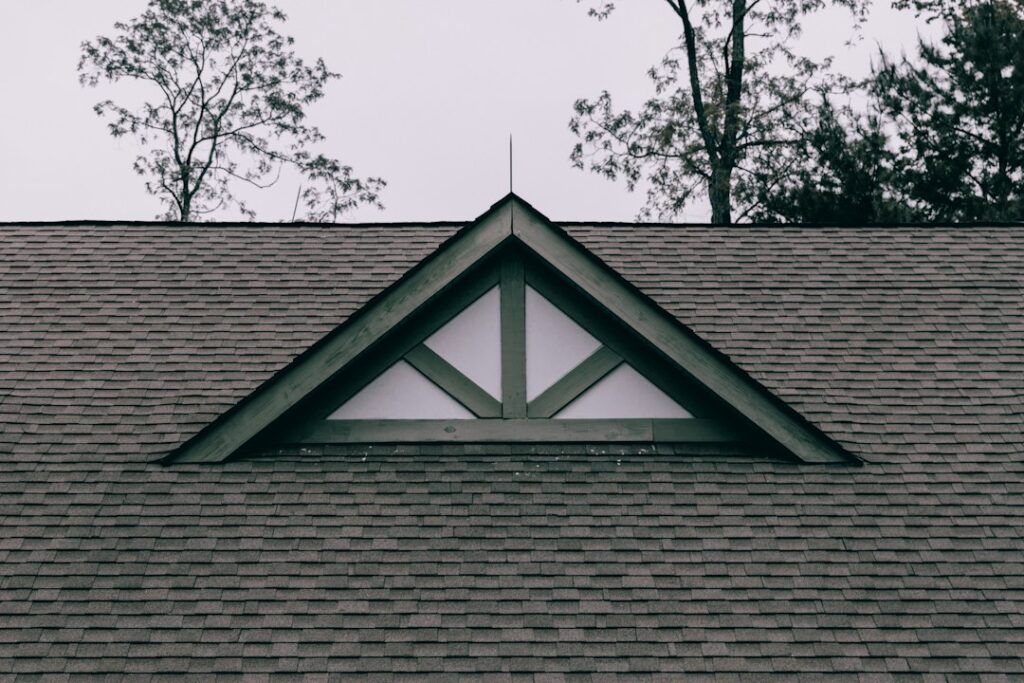
A gable roof has two sloping sides that meet at a ridge, creating a triangular wall section at each end of the house. This is one of the most recognizable roof forms in residential design.
Gable roofs can make a home appear taller and more traditional. They also create useful attic volume, especially when the roof pitch is moderate or steep. That space may be used for storage, mechanical equipment, or finished rooms if the structure, insulation, ventilation, and stair access are properly planned.
The main design consideration is wind exposure. A gable end presents a broad vertical surface, so framing and roof-to-wall connections must be properly designed. Gable roofs also need carefully planned flashing and ventilation at valleys, dormers, chimneys, and other intersections.
For homes with simple rectangular floor plans, a gable roof often provides an efficient balance between construction simplicity, attic space, and familiar appearance.
What makes a hip roof different?
A hip roof slopes downward on all four sides rather than ending in vertical gable walls. This creates a more compact, balanced appearance and gives the roof edges similar exposure around the entire house.
Hip roofs can perform well in areas that experience changing wind directions because the sloped sides offer fewer large vertical end walls. They also provide broad eaves, which can help protect siding, windows, and exterior doors from rain and snow.
The tradeoff is that hip roofs usually require more framing and may create less attic volume than a similarly sized gable roof. Their multiple slopes also introduce additional ridges, hips, and intersections that must be detailed carefully.
A hip roof often complements ranch-style homes, low-profile designs, additions, and houses with a broad footprint. It can make a building appear wider and more grounded.
How do gambrel roofs change interior space?
A gambrel roof has two slopes on each side: a shallow upper slope and a steeper lower slope. This shape is commonly associated with barns, but it can also be used on homes.
The steep lower sections allow the roof to create substantial upper-level living space. A gambrel design may make a second floor feel more open than a conventional roof with a single slope. It can also give a home a distinctive architectural identity.
Because the roof has several changes in angle, water-shedding details and transitions require careful planning. Snow can collect in areas where roof sections meet, and the steeper lower slopes may place more water near walls, windows, and lower roof edges.
Gambrel roofs are often chosen for appearance and interior volume, but they require thoughtful structural design, insulation, ventilation, and drainage planning.
What is the effect of a shed or single-slope roof?
A shed roof slopes in one direction, rather than using two matching slopes. This form is common on modern homes, additions, porches, garages, and small accessory structures.
A single-slope roof can simplify drainage because water moves toward one primary edge. It can also create high ceilings, clerestory windows, or large areas for natural light. With the slope facing the right direction, the roof may support daylighting or solar design goals.
The roof’s orientation matters greatly. A low edge must have enough drainage capacity, and walls on the downhill side may receive more runoff. Snow sliding from a steep shed roof can also affect walkways, entrances, windows, or lower roofs.
This shape works particularly well when the roof is coordinated with the site, prevailing weather, window placement, and the home’s interior layout.
How do flat and low-slope roofs influence a house?
Flat roofs are rarely completely flat. They usually include a slight slope so water can move toward drains, scuppers, or perimeter edges. Low-slope designs can give a home a clean, horizontal appearance and may support rooftop equipment, outdoor areas, or compact modern forms.

Drainage is the central concern. Water that remains on a roof can increase the chance of membrane deterioration, leaks, ice formation, and structural stress. Gutters and internal drains must remain clear, particularly during autumn leaf drop and winter weather.
Low-slope roofs also place greater demands on waterproofing details. Seams, penetrations, parapet walls, and edges need materials and installation methods suited to limited drainage speed. These roofs can be attractive and functional, but their performance depends heavily on precise design and maintenance.
How does roof shape affect attic space and ventilation?
Roof shape directly influences whether a home has a usable attic, a cathedral ceiling, or a combination of both. Steeper roofs generally create more vertical space, while hip and complex roofs may divide the attic into smaller areas.
Ventilation must be considered along with insulation. Warm, moist air that reaches a cold roof assembly can contribute to condensation and moisture damage. A properly planned system may use soffit vents, ridge vents, gable vents, or other methods suited to the roof’s geometry.
Not every roof can use the same ventilation arrangement. A roof with multiple valleys, dormers, or intersecting sections may require a more detailed approach than a simple gable roof. Blocked vents, compressed insulation, and poorly sealed attic penetrations can reduce performance regardless of the roof shape.
Does roof shape affect heating and cooling?
Yes. Roof geometry influences attic volume, solar exposure, insulation area, and the amount of exterior surface exposed to wind and temperature changes.
A complex roof may create more exterior edges and junctions, which can increase opportunities for air leakage or thermal bridging. A simple roof can be easier to insulate continuously, although its performance still depends on materials and installation quality.
Window placement is also connected to roof design. Dormers, clerestory windows, and high gable windows can bring daylight into upper rooms, but they also add flashing, insulation, and maintenance considerations.
For local homes, roof design should account for winter heat loss, summer attic temperatures, snow accumulation, and the need to keep ice and water away from vulnerable roof edges.
Which roof shape is best for a home?
There is no single roof shape that is best for every house. The right choice depends on the home’s floor plan, desired interior space, drainage needs, exterior style, budget, structural requirements, and exposure to weather.
A simple gable may suit a compact home with an attic. A hip roof may fit a broad, balanced floor plan. A shed roof may work well for an addition or daylight-focused design. A gambrel may be appropriate when upper-level space and distinctive appearance are priorities.
The most successful roof designs treat the roof as part of the entire building system. Shape, pitch, overhangs, insulation, ventilation, flashing, gutters, windows, and structural connections all need to work together. In Batavia, that coordination is especially useful for managing snow, rain, ice, and repeated seasonal temperature changes.
